Mother and Mrs. George Armstrong’s Christmas pageant handoff
The Best Christmas Pageant EverThe Christmas pageant handoff between Narrator's Mother and Helen Armstrong turns an unexpected injury into a test of who may claim authority over a familiar church tradition. Armstrong's broken leg removes its established organizer from the work, but not from its business: she continues directing from a hospital bed. Narrator's Mother takes over the practical responsibility, then resists the idea that Armstrong alone can define what a properly run pageant should be. The transfer ends not simply with a replacement in charge, but with Mother's decision to stage the pageant on her own terms and include the Herdman children.
The Injury and the Vacant Role
Armstrong falls two weeks before Thanksgiving, while the Christmas pageant is still ahead. Her injury is visible to the neighborhood: people hear the siren, see the ambulance, and watch policemen carry her from her home on a stretcher. Even as she is taken away, she gives instructions about contacting her husband at work, turning off the stove beneath her potatoes, and informing the Ladies' Aid that she will miss its meeting. When a neighbor asks whether she is in pain, Armstrong answers that she is, then adds a warning about the children tearing up her privet hedge. The scene establishes the force of her habits of command before it establishes who will replace her.
At Church, Armstrong has made herself responsible for nearly everything short of preaching, but the Christmas pageant is her most prominent annual task. Her fall therefore creates more than a vacancy in the rehearsal schedule. It leaves a familiar production without the person accustomed to organizing it, only weeks before the holiday season. Narrator's Mother immediately worries about what will happen to the pageant, while the narrator's account stresses how unusual Armstrong's absence is: in the pageant's otherwise predictable history, her broken leg is the only unexpected disruption.
How the Work Passes to Mother
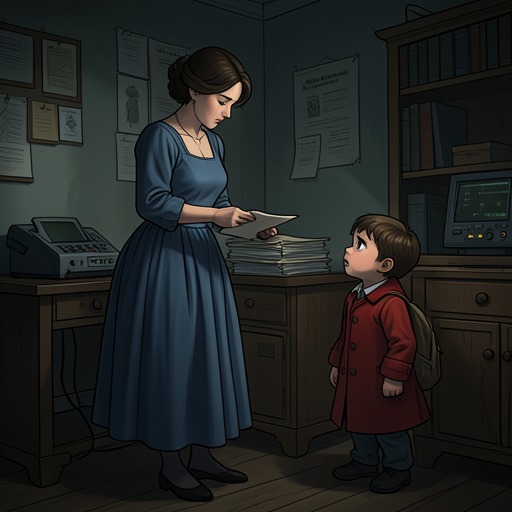
The pageant is only one item in the work Armstrong leaves behind. She also chairs the Ladies' Aid Bazaar and coordinates the Women's Society Pot-luck Supper, so people telephone one another to redistribute her responsibilities. Narrator's Mother begins with a list of names and is trying to find someone for the bazaar when Mrs. Homer McCarthy calls about the supper. McCarthy finds another person to take that event; Mother finds someone for the bazaar. Once those tasks have been reassigned, the pageant is the remaining job, and it falls to Mother.
The practical handoff is therefore partly accidental: the other commitments find replacements, and the annual production is left with Mother. She regards that distinction as consequential. She says she could manage the pot-luck supper easily, describing its main challenge as preventing everyone from bringing meat loaf, but the pageant is the assignment that daunts her. The contrast reveals that taking it on is not just another instance of helping with church work. She is assuming responsibility for a public, recurring event whose established routines and expectations belong to someone else.
Armstrong's Continuing Direction
The transfer of labor does not at first transfer control. From her hospital bed, Armstrong tells Mother that the same people have always received the main parts and that everyone should be given a chance. She proposes her customary process: gather the participants, explain the rehearsals, insist that they arrive on time and pay attention, identify Mary, Joseph, the Wise Men, and the Angel of the Lord as the leading roles, and remind the cast that there are no small parts, only small actors. Her advice supplies both a procedure and a principle of fair participation, but it also keeps her voice at the center of a production she can no longer run in person.
The calls make that continuing authority part of Mother's domestic life. Armstrong phones at least every other day and always at supper time. She announces that she does not want to interrupt, then proceeds with the call; meanwhile, Narrator's Father paces in the hall and mutters about her. Further instructions cover costume construction, distinguishing hemming from cutting, and the rule that the angel choir must not wear lipstick. By Sunday, after another week of calls, Mother is already sick of the whole undertaking. Her frustration grows not from a single instruction but from the repeated experience of having accepted the job while its former director continues to prescribe how it should be done.
A New Claim to the Pageant
The decisive break comes when Armstrong hears that the Herdman children have become part of the pageant and says she feels personally responsible for what has happened. She attributes the situation to her own inability to be up and doing her duty. Mother reacts angrily to that claim: Armstrong's absence, she insists, does not mean that nobody else can run the production. The exchange exposes the difference between a handoff in name and a handoff in authority. Mother has done the work of taking over, yet Armstrong's assumption that the outcome rests on her alone threatens to reduce Mother's role to caretaking under supervision.
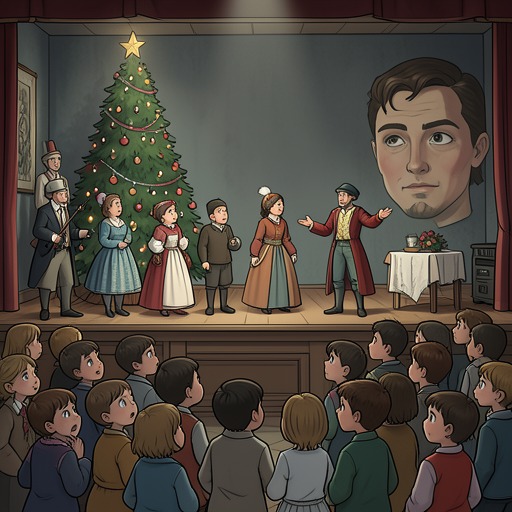
Mother's answer is a change of purpose. She had intended only to do the best she could under the circumstances; now she resolves to make the pageant the best one anybody has seen and to do it with the Herdmans. They had raised their hands when no one else did, and she treats that fact as sufficient reason to include them. Her decision converts the pageant from a burden left behind by Armstrong's injury into a responsibility Mother actively claims, while making the cast's openness part of the way she will lead.
That choice meets resistance: some people object that a family that does not attend Church should not take over the production, and Narrator's Father worries aloud about the Women's Society's silver service. The Reverend Hopkins ends the complaints by invoking Jesus' welcome to all children, explicitly including the Herdmans. In this aftermath, the handoff's wider significance becomes clear. Armstrong's injury creates the opening, and her continued directions sharpen the conflict, but Mother's assumption of authority makes a different outcome possible: the pageant's traditional structure remains, while its circle of participants expands.